
Walking in Another Person's Shoes
Loving a film that ignores its own message

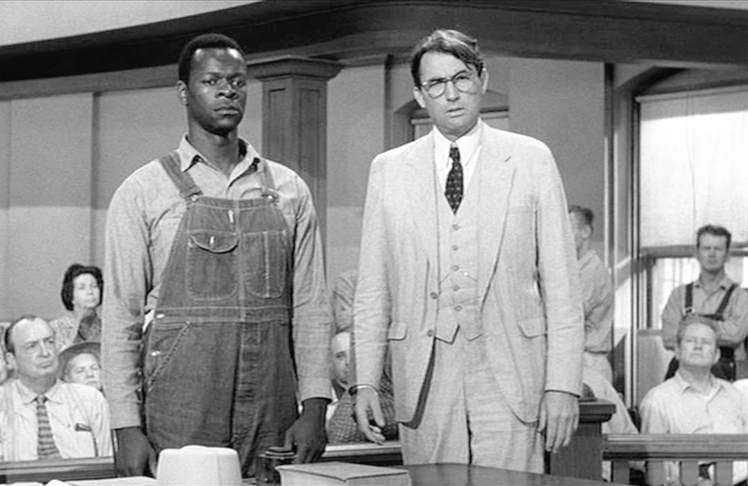
I don’t remember when I first read Harper Lee’s classic novel To Kill A Mockingbird, but I know it was before I saw the movie because I remember being so disappointed. Don’t get me wrong — I like the film. But my first reaction had to do with aspects of the novel that were altered or omitted. Harper’s created a more detailed and colorful world surrounding Atticus Finch, particularly the people residing in the neighborhood.
Years later, after accepting a job to adapt a novel for the screen, I began to appreciate more fully the difficulty of such a challenge. Trying to please fans of any book, beloved or not, is futile; you’re always going to disappoint.
To state the obvious: books are not movies. Books activate and demand different parts of our imagination, which is why we love them. Movies offer visual interpretations of the things we had only imagined on the page and allow us to be moved and affected in other ways. Theater and film, fiction and nonfiction prose, documentaries, opera and ballet (I’m looking at. you, Chalamet)… they each feed us in different ways.
A recent screening of To Kill A Mockingbird at The Kentucky Theatre to benefit the ACLU reminded me of why we go to the movies. Sitting shoulder to shoulder with a bunch of strangers in a packed theater, watching the same story unfold onscreen, often produces the effect of connection. On this particular evening, the movie connected me not only to the other Southerners in the room, but to the ones from the past, the ones no longer with us but who lived through the period depicted, people who appreciate the story’s messages of justice in the face of systemic racism, kindness in response to cruelty, racism, and fear.
To Kill A Mockingbird, for all its virtues, is a White Savior film. Gregory Peck, as Atticus Finch, is the hero. He’s all but deified in the final courtroom scene as the Black citizens, forced to separate balcony seating during the trial, stand to honor Finch as he exits. I found it deeply moving and deeply unsettling. In the story, Finch is doing his job — nothing more. What’s remarkable and brave is the time period in which he’s doing his job. But I was left wanting to know more about Tom Robinson, the Black man accused of a crime against a white woman. Brock Peters (Tom) has little screen time, but turns in an extraordinary performance. It left me wanting his perspective of the story.
One of the virtues of the film is Peck’s and director Robert Mulligan’s refusal to let the film indulge excessively in Atticus Finch’s personal or professional distress about the events. Finch’s objective is to make sure his children understand that this is a tragedy of injustice, not a failure to win in the courtroom.
In a recent post on social media I asked people to tell me their favorite film of all time. To Kill A Mockingbird came up a lot. I don’t wonder why. For a lot of white Southerners like myself, it’s a story of hope for a better world. To paraphrase Atticus Finch to his children: it’s important to walk in another person’s shoes. To tell a story from the point of view of Tom Robinson is to do this.
It is possible to love To Kill A Mockingbird and simultaneously wish the filmmakers had been allowed — or even dared — to take Atticus’s counsel to heart.
Having not watched this since I was much younger and muuuuch less aware of white saviorism, reading this just elicited a "what? Oh of course, how did I not see that before?" reaction out of me. Thanks for sharing.
Fun fact from one of your Star Trek friends: Brock Peters later had a minor role in a couple of the Kirk/Spock movies and also starred as Benjamin Sisko's father is Deep Space Nine!