
Brothers and Sisters
Lonergan's Screenwriting Masterclass

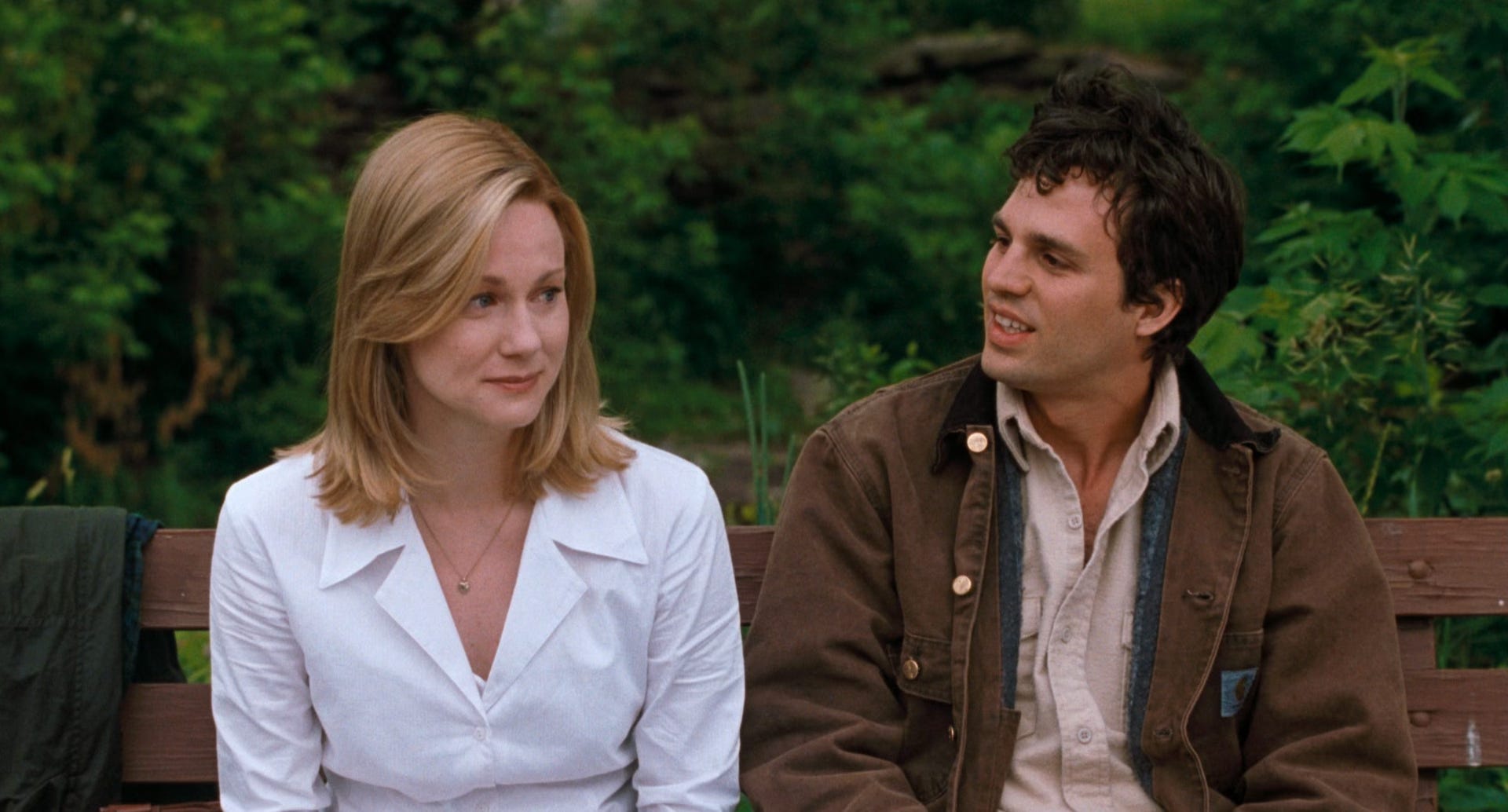
I recently became acquainted with a cinema term I had not heard before — the title drop. It’s that moment in a movie when a character speaks aloud the title of the film. Of course I’m familiar with the practice, but I had no idea there was an actual name for it. Like most tools of filmmaking, it isn’t necessarily good or bad. Some of the great movies employ the title drop. Forget it, Jake. It’s Chinatown. Always do the right thing. Welcome to the matrix. Next Saturday night, we’re going back to the future! It is not strictly ballroom. You get the picture.
One of my favorite films that denies us the pleasure of ever hearing the title is Kenneth Lonergan’s directorial debut, You Can Count On Me, starring Laura Linney, Mark Ruffalo, and Matthew Broderick. Lonergan, a celebrated young playwright when the movie was made in 2000, wrote the screenplay and wisely chose to reward the audience with discovering for themselves what the title means and when and where it might have been spoken in the story. It is a deeply satisfying moment.
You Can Count On Me is the story of Sammy (Linney), a single mom living in a small town in upstate New York with her son, Rudy (Rory Culkin). Her steady, low-key life consists of working at a bank, going to church, and shuttling Rudy back and forth to school or to his babysitter’s house. She has an on-again, off-again boyfriend she hooks up with from time to time, but mostly her life has settled into a rhythmic, predictable pattern until Sammy gets a letter from her brother, Terry, saying he’s coming to visit.
In a remarkable film debut by Ruffalo, Terry is the polar opposite of Sammy. Terry’s life is unpredictable. One day he is living in Alaska, the next he might be in jail in Florida for assaulting a stripper’s boyfriend. He’s smart, well-read, and rough around all of his many edges. Other than the occasional postcard, Terry has been pretty much out of Sammy’s life, which is made more painful by the fact that, as children, their parents were killed in a car accident. They only have each other.
Sammy adores Terry and can hardly wait for him to visit. She cleans the entire house and preps Rudy—who doesn’t even remember meeting Terry—for the big arrival. But when he shows up, Sammy learns quickly that his visit is short and specific: he needs money to help out with his girlfriend back in Worcester, Massachusetts, who’s “kind of in a bad situation.” Circumstances eventually force Terry to extend his stay, and during this time, his presence disrupts Sammy’s life in both positive and negative ways. With Terry around to help out with Rudy, Sammy finds some time for herself to discover what she really wants in her life, while Terry finds connection with his nephew and a reconnection to Sammy. His presence gives her permission to exhale, to rebel, to play. It’s a sweet and subtle film about the emotional minefields in sibling relationships.
Lonergan, who went on to make the glorious Margaret and the devastating Manchester by the Sea, was nominated for the Academy Award for Best Original Screenplay for You Can Count On Me, and Linney earned her first nomination for Best Actress in a Leading Role. The screenplay is often used in film school writing classes and actors have consistently used scenes from the film for their studies. This makes sense to me. The people who populate the small town in the story are real, three-dimensional, and complex. The dialogue is simple, spare, and authentic.
It’s also happens to be very funny.
Check out this scene of Sammy driving home after sneaking out for a little hotel romp with her married boss (Broderick). Linney delivers a complete three-act structure without a single line of dialogue.
If you have never seen the film, I highly recommend it. If you have, check out the scene below, the penultimate scene of the film, the one where somebody should say the title out loud. It is heartbreaking and tender and real, thanks to great writing and these fine performers.
Thanks for this. Was familiar with the film, but not this kind of nuance. This tiny scene made me cry.
I just this moment finished watching this for the first time. I love films in part because they often help me to identify/understand what I'm feeling in my own life. This film is no exception. I am soooo enjoying your commentary and having you point the way to films I've missed. Thank you!